Introducing Iceland
For many travelling golfers, Iceland sits even further outside the usual conversation than the rest of the Nordic region. It is a country more often associated with volcanoes, glaciers, and dramatic landscapes than with fairways and greens. The scale of the country, the limited number of courses, and the perception of challenging weather conditions all contribute to the idea that Iceland is not a conventional golf destination. On paper, that assessment is understandable.
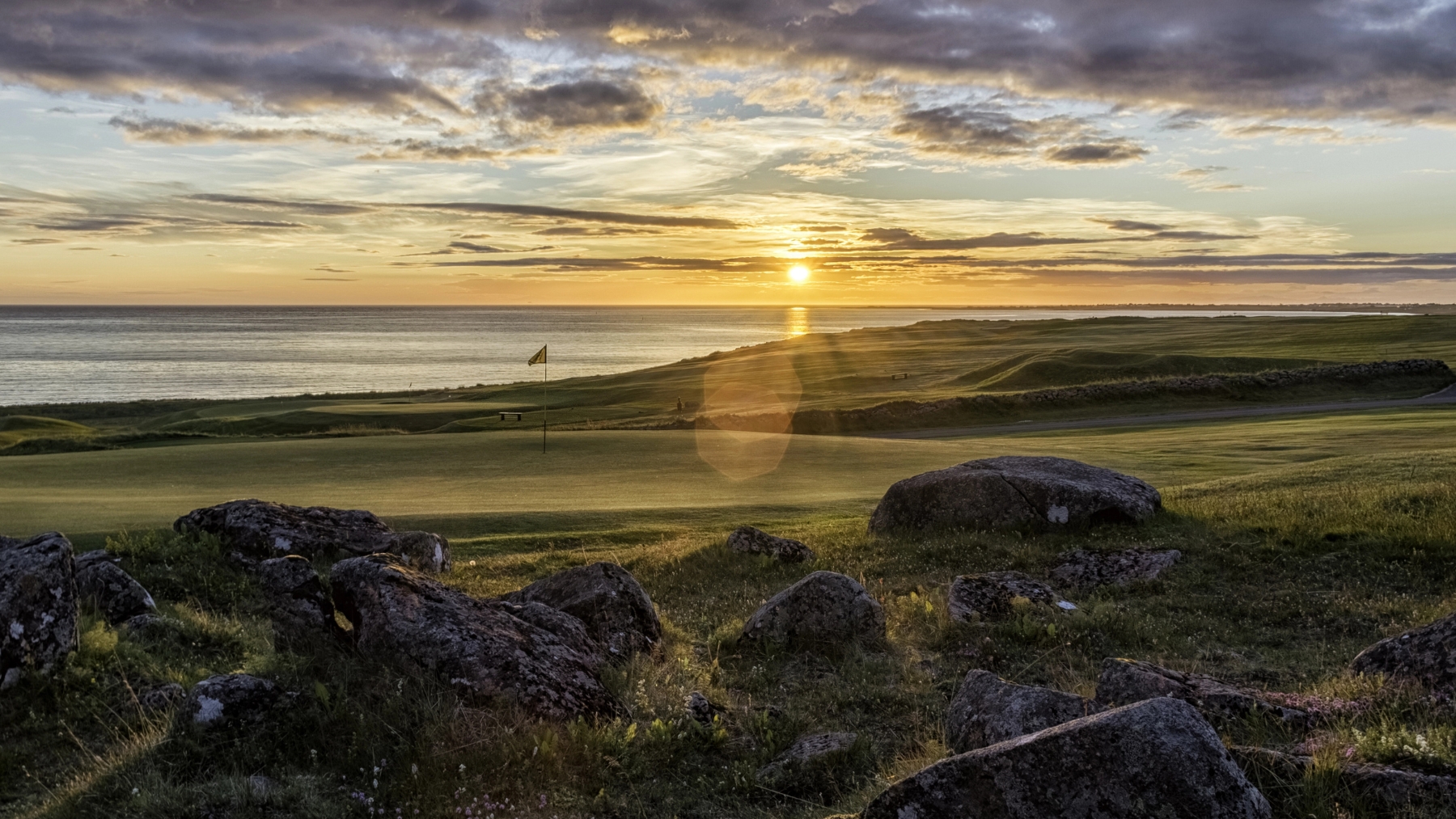
Look a little closer, however, and Iceland begins to reveal something far more interesting. Golf here is not about variety in the traditional sense, nor is it about a deep catalogue of well-known courses. It is about setting, atmosphere, and experience. The game in Iceland is shaped almost entirely by the landscape, and that landscape is unlike anything else in Europe. Lava fields, black sand, exposed coastline, and vast open space create an environment where golf feels raw and unfiltered.
For the travelling golfer, Iceland offers something genuinely different. It is not a place for a standard golf trip built around convenience and volume. Instead, it suits those who are willing to travel a little further and accept a different rhythm. The reward is a golfing experience that feels memorable not because of how many courses you play, but because of how distinct each round feels. Iceland does not compete with other destinations on their terms. It offers something entirely its own.
What Makes Golf in Iceland Different
The defining characteristic of golf in Iceland is exposure. Unlike Finland’s forests or Sweden’s mixed landscapes, Iceland’s courses are often set in open, elemental environments. Wind is a constant factor, and the land itself tends to feel rugged rather than shaped or softened. This creates a style of golf that is less about precision in calm conditions and more about adaptability.
Many courses are built on or around lava fields, which gives them a visual identity that is immediately recognisable. Fairways can feel carved out of darker, more textured terrain, and the contrast between maintained playing surfaces and the surrounding land is often striking. In coastal areas, the influence of the sea becomes even more pronounced, with wind, salt air, and shifting light all playing a role.
There is also a strong sense of simplicity in Icelandic golf. Facilities are generally good, but they are rarely the focus. The emphasis remains on the course and the setting rather than on a polished resort-style experience. That simplicity works well in this environment. It allows the landscape to take precedence.
Like the rest of the far north, Iceland also benefits from long summer daylight hours. During peak season, golf can be played late into the evening, and the extended light creates a different pace to the day. Rounds feel less constrained, and there is a natural flexibility that suits the wider travel experience in the country.
Reykjavík and the South West
For most visitors, Reykjavík is the natural base. The capital is easily accessible, relatively compact, and within reach of several of the country’s most established courses. This region offers the most practical introduction to golf in Iceland and allows you to combine playing with the wider travel experience the country is known for.
Korpúlfsstaðir Golf Course, just outside Reykjavík, is one of the main courses in the area and provides a strong example of Icelandic golf close to the city. It combines open space with views towards the coastline and gives an immediate sense of how landscape influences the game here. Reykjavík Golf Club, with its Grafarholt course, adds another important option, offering a slightly more structured layout while still maintaining the exposed feel that defines golf in Iceland.
A little further along the coast, Keilir Golf Club, located on the Reykjanes Peninsula, stands out for its setting. Parts of the course are routed through old lava fields, creating a visual experience that feels distinctly Icelandic. It is not simply a round of golf. It is a reminder of where you are.
This region works well because it allows you to ease into Icelandic golf without needing to travel extensively. You can play several courses while still having access to Reykjavík’s accommodation, restaurants, and wider attractions. For a first visit, that balance is important.
The South Coast
Moving away from Reykjavík, the south coast begins to show a slightly different side of the country. This is one of Iceland’s most visited regions for its natural landmarks, and golf here can be combined with a broader travel itinerary that includes waterfalls, black sand beaches, and open landscapes.
Vestmannaeyjar Golf Club, located on the Westman Islands, is one of the most distinctive courses in Iceland. Set within a natural amphitheatre formed by volcanic rock, it creates a playing environment that feels both enclosed and dramatic at the same time. The routing makes full use of the terrain, and the experience is as much about the setting as it is about the golf itself.
Further along the south coast, smaller clubs provide additional opportunities to play, often in quieter and less visited surroundings. These courses may be simpler in design, but they contribute to the overall sense that golf in Iceland is closely tied to the land rather than built on top of it.
This region suits golfers who are already travelling through Iceland and want to integrate golf into a broader trip. It is less about building a golf-only itinerary and more about adding another dimension to the journey.
Northern Iceland
Northern Iceland offers a more remote and less frequently visited golfing experience. This part of the country is quieter, more sparsely populated, and shaped by a slightly different landscape. For golfers willing to travel further, it provides a sense of space and isolation that is difficult to find elsewhere.
Akureyri Golf Club is the standout course in the north and is one of the most northerly 18-hole courses in the world. During the height of summer, the midnight sun allows for golf at almost any hour, creating a playing experience that feels entirely removed from the usual structure of the game. Tee times become flexible, and the rhythm of the day shifts accordingly.
The course itself reflects the surrounding landscape, with open terrain, changing light, and a sense of distance that defines the experience. It is not about intricate design or highly manicured presentation. It is about the combination of golf and place.
Northern Iceland is not essential for every trip, but for those who include it, it often becomes one of the most memorable parts of the experience.
Standout Courses to Know
Iceland does not offer a long list of internationally recognised courses, but it does provide a small number of very distinctive ones. Keilir Golf Club, with its lava-field setting, is perhaps the most visually unique. Vestmannaeyjar Golf Club offers a dramatic and memorable routing within volcanic terrain, while Reykjavík Golf Club and Korpúlfsstaðir provide accessible and well-established options near the capital. Further north, Akureyri Golf Club adds a completely different dimension through its location and extended daylight.
What becomes clear is that Iceland is not about ranking courses against each other in the usual way. Each one tends to offer something specific, often tied closely to its setting. The strength of the country lies in how these experiences come together rather than in any single headline venue.
When to Visit
The Icelandic golf season is relatively short, typically running from late May through to early September. Within that window, June to August offers the most reliable conditions and the longest daylight hours.
Summer light plays a significant role in the experience. Even in the south, evenings stretch out, and in the north, the midnight sun creates entirely different playing possibilities. This allows for a more relaxed approach to scheduling and makes it easier to combine golf with travel.
Weather remains a factor throughout the season. Conditions can change quickly, and wind is often part of the experience. Planning with a degree of flexibility is important.
Typical Costs and Overall Value
Iceland is not a low-cost destination. Travel, accommodation, and food are all relatively expensive, and golf follows a similar pattern. Green fees are generally in line with the broader cost of living.
Value in Iceland is not about finding inexpensive rounds. It is about the overall experience. The uniqueness of the landscape, the quality of the setting, and the distinctiveness of the golf all contribute to a sense that the trip offers something different.
For golfers who are prepared for the cost, Iceland can feel worthwhile precisely because it does not replicate anything else.
Where to Stay
Most golf trips to Iceland are based around Reykjavík, where accommodation options are widest and travel is easiest. From there, it is straightforward to access several key courses within a manageable distance.
Beyond the capital, accommodation becomes more varied and often more closely tied to the landscape. Guesthouses, small hotels, and lodges are common, particularly in more rural areas. In keeping with the overall feel of the country, where you stay often becomes part of the experience rather than just a practical decision.
Choosing a base depends largely on how much of the country you plan to cover. A Reykjavík base works well for shorter trips, while a more mobile approach suits longer itineraries.
How to Get There and Around
Keflavík International Airport serves as the main entry point and is located a short distance from Reykjavík. Flights from across Europe and North America make Iceland relatively accessible despite its remote location.
Once in the country, travel is straightforward but can take time due to distances and road conditions. Hiring a car is the most practical option, particularly if you plan to explore beyond the capital region. This allows for flexibility and makes it easier to combine golf with the wider travel experience.
Public transport exists but is less suited to a golf-focused itinerary. For most visitors, driving provides the simplest solution.
Who Iceland Is Perfect For
Iceland suits golfers looking for something genuinely different. It works particularly well for those who value landscape, atmosphere, and experience over volume. If you are interested in combining golf with travel, and if you enjoy destinations that feel slightly outside the mainstream, Iceland is a strong option.
It is also well suited to golfers who are comfortable adapting to conditions. Wind, weather, and changing light are all part of the experience, and embracing that is key to enjoying the trip.
Who It Might Not Suit
If your priority is playing a large number of courses in a short period, or if you are looking for a traditional golf resort experience, Iceland may not be the right fit. The country does not offer the same density of courses or the same level of convenience as more established golf destinations.
It is also less suited to golfers who prefer predictable conditions. The variability of weather is part of what defines the experience, and not everyone will find that appealing.
Final Verdict: Should You Choose Iceland for a Golf Trip?
Yes, if you are looking for something different.
Iceland offers a golfing experience shaped almost entirely by landscape and environment. It is not about quantity or convenience, but about moments that feel distinct and memorable. For the right golfer, it is not just another destination. It is one that stays with you.