Introducing Norway
For many travelling golfers, Norway is not an obvious choice. It is better known for fjords, mountains, and long drives through dramatic landscapes than for golf, and compared with Sweden or Denmark it has fewer courses, a shorter season, and a reputation for being expensive. On paper, it can look like a country where golf sits slightly off to one side rather than at the centre of the travel experience.
That view is understandable, but it also misses what makes Norway interesting. Golf here is not really about volume, convenience, or collecting a long list of easy rounds. It is about playing in places that feel unmistakably Norwegian. The landscape is not just a backdrop. It shapes the feel of the courses, the rhythm of the trip, and often the memory you take away from it. In Norway, the setting is rarely incidental.
For golfers willing to accept that the trip may need a little more planning, Norway can offer something that is genuinely difficult to replicate elsewhere in Europe. There are well-established courses around Oslo, stronger modern layouts in the south, and in the far north there is the kind of golf that becomes part of a bigger travel experience rather than simply a round on a scorecard. It is not the easiest destination, but it can be one of the most memorable.
What Makes Golf in Norway Different
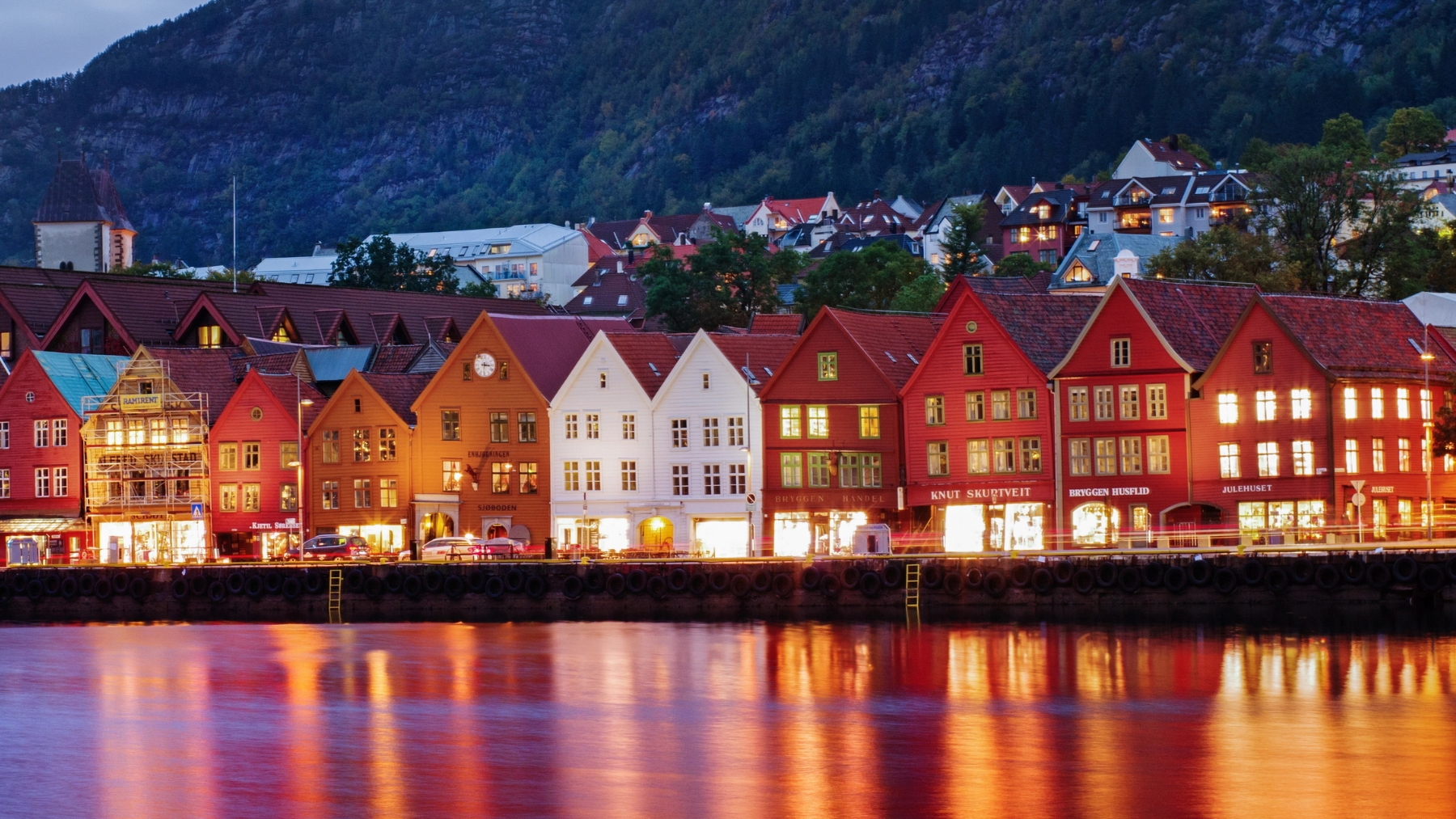
The defining characteristic of golf in Norway is the landscape. This is a country of steep valleys, rock, forest, coastline, and water, and that has an immediate effect on where courses can be built and how they feel to play. Even when the design itself is relatively conventional, the surroundings often are not. A course in Norway can feel more tied to terrain and setting than many golfers are used to elsewhere in northern Europe.
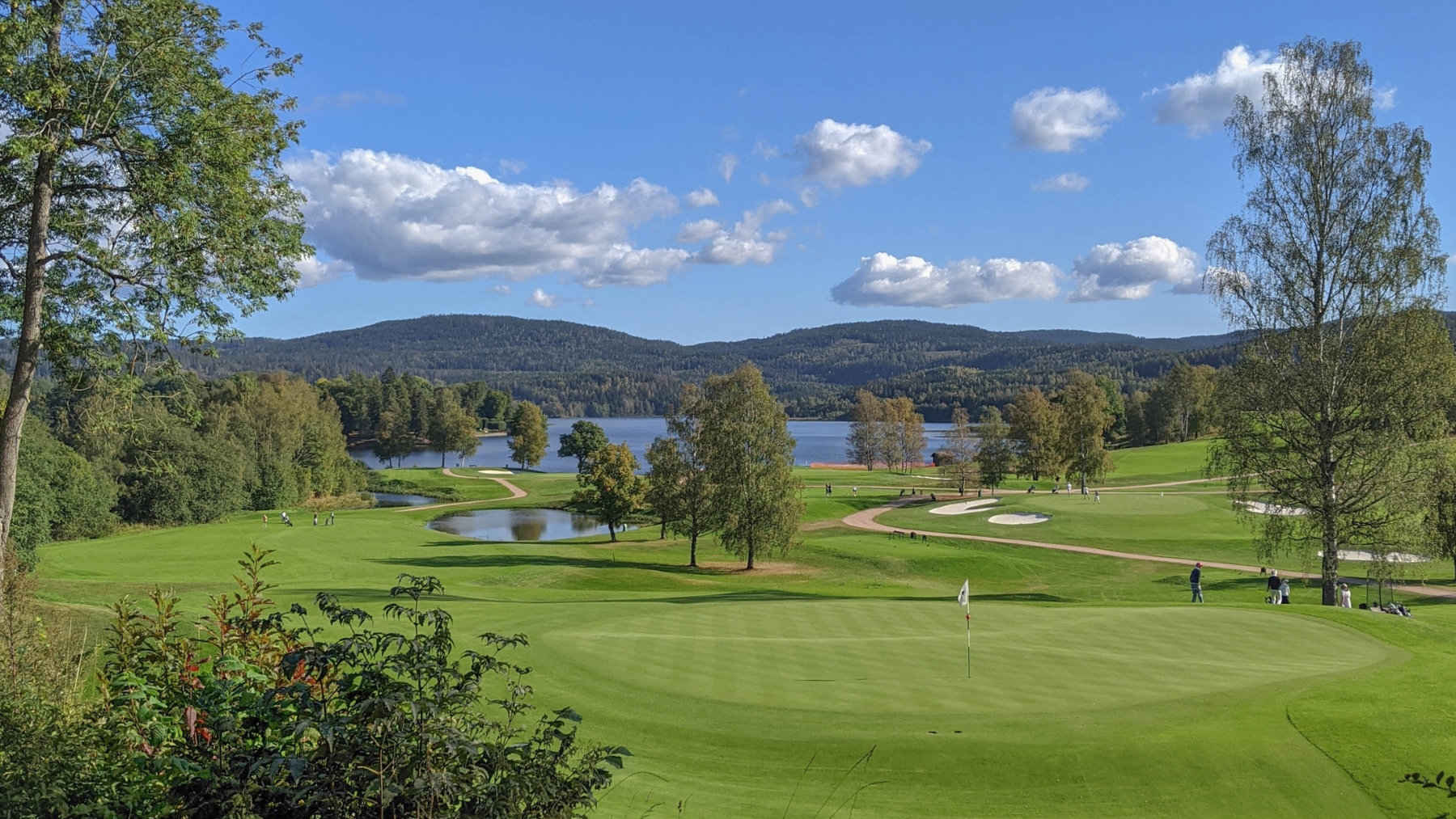
That creates a different kind of visual experience. In Denmark, golf is often shaped by wind, openness, and coastline. In Sweden, there is greater breadth, from parkland and woodland layouts to stronger resort-style experiences. Norway, by contrast, often feels more dramatic and more uneven in the best sense. Courses can sit beside lakes, move through forested corridors, or use land that rises and falls in a way that constantly reminds you where you are. Even around Oslo, where the golf is most established, the landscape still plays a central role.
There is also the question of scale. Norway is long, geographically demanding, and relatively lightly populated. That means golf can feel more spread out and more remote. A round here is often part of a wider day of travel rather than something slotted neatly into a dense resort schedule. For some golfers that will feel inconvenient. For others, it is part of the appeal. The trip becomes broader than golf alone.
Culturally, Norwegian golf also tends to feel understated. Clubs are often relaxed, practical, and closely connected to ordinary outdoor life. Even very good courses do not always present themselves in an overly polished or showy way. There is usually less theatre around the experience, which suits the country rather well. The golf tends to feel grounded.
Oslo and the South East
For most international visitors, Oslo is the natural starting point. It is the main gateway into the country and the part of Norway where golf is easiest to organise. If you want to understand the strongest and most established side of Norwegian golf without immediately committing to long internal travel, this is the region that makes the most sense.
Oslo Golf Club remains the historic reference point. Set beside Lake Bogstad and dating back to the 1920s, it combines a strong sense of tradition with a location that feels calm and rooted in the landscape rather than detached from it. It is not dramatic in the way northern Norway can be, but it gives a clear sense of how golf developed around the capital and why the Oslo area still anchors the country’s golfing identity.
Beyond that, the wider region offers much of Norway’s best-known modern golf. Miklagard Golf, northeast of Oslo, is one of the country’s most talked-about contemporary courses and is often mentioned among the strongest layouts in Norway. Holtsmark, with its Scandinavian woodland character and more rugged movement through the terrain, offers a different feel again. Losby, Kongsvinger, and Nøtterøy add further depth if you want to build a more substantial itinerary in the south-east and around the Oslofjord side of the country.
What makes this area particularly useful is not just quality, but practicality. Distances are more manageable than in much of the rest of Norway, the roads are straightforward, and you can base yourself either in Oslo itself or slightly outside the city depending on how urban or golf-focused you want the trip to be. For many travelling golfers, this is the easiest way into Norway and still a very good one.
The South Coast and Around Kristiansand
Further south, the golf begins to take on a slightly different feel. The Kristiansand area and the broader southern coastline are often milder in tone, easiergoing in atmosphere, and better suited to golfers who want to combine a road trip with a handful of strong rounds rather than stay fixed in one place. This part of Norway does not have the same concentration of well-known courses as the Oslo region, but it does contain one of the country’s standout names.
Bjaavann Golf Club is the obvious example. Set near Kristiansand, it has become one of the most recognisable modern courses in Norway, with holes routed around water, forest, and rocky outcrops in a way that feels both challenging and very much of its setting. It is one of the clearest cases of a Norwegian course that leaves a lasting visual impression without relying on artificial drama. The land does the work for it.
This region also works well because the golf can sit naturally within a broader journey. The coastline, ferry connections, and the general feel of southern Norway allow for a trip that includes golf but is not entirely dominated by it. That can suit couples, small groups, or golfers who enjoy the wider travel experience as much as the rounds themselves. Norway often works best when approached like that.
The West Coast and Fjord Region
The west coast is where Norway becomes unmistakably itself. This is the part of the country that most travellers picture first: fjords, mountains, rapidly changing weather, and roads that twist through landscapes that feel far bigger than the golf within them. As a pure concentration of elite courses, it is not the strongest region in the country, but as a place to combine golf with extraordinary scenery it is very hard to overlook.
Golf here is often more about context than headline reputation. Stavanger Golf Club is one of the better-known names on the western side of the country and offers a useful anchor point, while other rounds in the region can be woven into a broader itinerary that is really about experiencing Norway itself. In this part of the country, that is often the right mindset. The golf adds shape to the trip, but the wider landscape gives the trip its identity.
Conditions can also feel more changeable here than in the south-east. Wind, rain, and shifting light all play their part, and that unpredictability affects how the golf is experienced. Some will find that frustrating, but it is also part of the honesty of golf in Norway. The country does not smooth everything out for you. The environment remains present.
Trøndelag and Central Norway
Central Norway receives less attention from international golfers, but it adds useful depth to the overall picture. Around Trondheim, golf begins to feel more local, more rooted in domestic club life, and slightly less shaped by visiting golfers’ expectations. That is not a weakness. In fact, it often gives a clearer sense of how Norwegian golf is actually lived.
Byneset Golf Club is the obvious course to know here, not least because it is the only Norwegian design from Donald Steel’s firm. It gives the region a course with genuine architectural interest and helps make Trondheim more than simply a stopping point on the map. Meland and a number of other clubs in broader central and western Norway also show that the country’s golfing depth does not stop at the capital region, even if much of it is less internationally visible.
This part of Norway tends to suit golfers who enjoy trips that feel exploratory rather than fixed around the same handful of famous venues. You are less likely to be chasing a single must-play round and more likely to be building a broader sense of place through several good ones.
Northern Norway
Northern Norway is where golf in the country becomes genuinely unusual. Once you move well above the Arctic Circle, the game is shaped not just by scenery but by light, distance, and the simple fact that you are playing golf in a place most people would never think to look. This is the region that has done most to put Norway on the global golfing map, and one course above all others explains why.
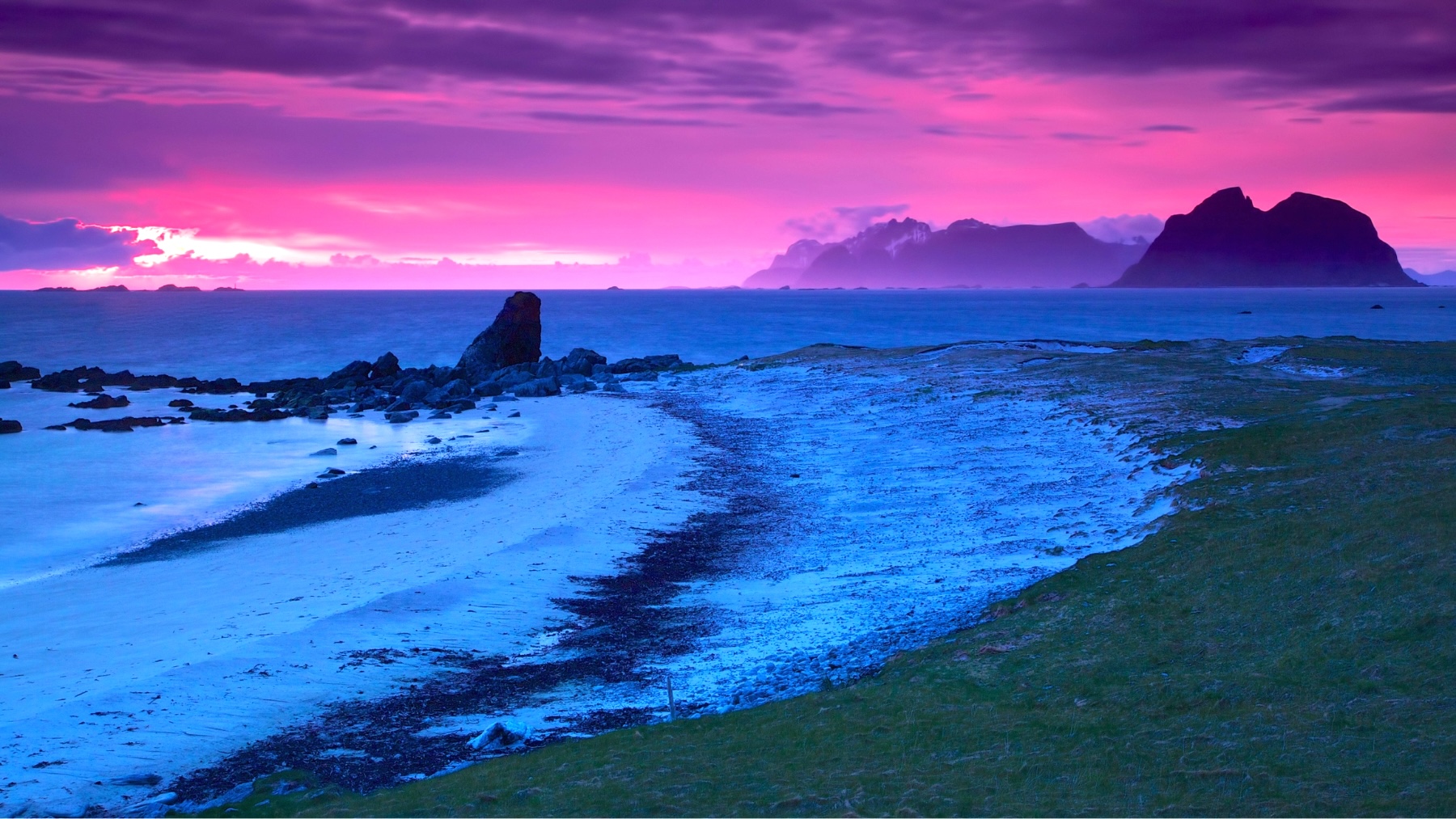
Lofoten Links is the standout name, and understandably so. Situated on Gimsøya in the Lofoten archipelago, it has become Norway’s most internationally recognised course because the setting is so extraordinary. Sea, rock, mountain, and shifting northern light combine to create something that is far more than a conventional golf round. In mid-summer, when the midnight sun allows play deep into the night, the experience barely resembles normal golfing routine at all.
That does not mean northern Norway should be reduced to one course, but it is fair to say that Lofoten Links is the clearest symbol of what makes Norwegian golf distinctive. The golf itself matters, of course, but the emotional force of the place matters just as much. This is not a destination for golfers who want to play three rounds a day and move on. It is for those who want one or two unforgettable ones in a landscape that feels almost unreal.
For many travellers, northern Norway will be too far, too specialised, or too logistically awkward to build an entire trip around. But for those willing to go, it offers something that almost no other golf destination in Europe can offer. It feels remote in the best possible way.
Standout Courses to Know
Norway does not have the same depth of internationally recognised courses as Sweden or Denmark, but it does have a clear group of real standouts. Lofoten Links is the one that has travelled furthest in terms of reputation and imagery, and rightly so. Miklagard Golf is often the modern benchmark around Oslo. Oslo Golf Club carries the historical weight. Holtsmark offers a strong woodland contrast, while Bjaavann, Stavanger, Kongsvinger, Byneset, and Nøtterøy all help round out a group of courses that make a Norwegian itinerary feel credible rather than token.
That matters because Norway is best approached with realistic expectations. You are not coming for endless depth in the way you might in some larger golf markets. You are coming for a smaller number of memorable venues, tied together by landscape, travel, and the wider character of the country. Once you view it through that lens, the course list begins to make much more sense.
When to Visit
Norway has a clearly defined golf season, and timing matters. For most travelling golfers, the realistic window runs from late spring into early autumn, with June, July, and August offering the strongest overall balance of condition, daylight, and travel ease. The further north you go, the more important that timing becomes.
Summer in Norway brings long days everywhere and, in the far north, the possibility of golf under the midnight sun. That is one of the country’s great advantages. Even in the south, the extended light changes the feel of the trip. Travel is easier to absorb, evening rounds are realistic, and a day never feels quite as compressed as it does further south in Europe.
May and September can work as shoulder-season options, especially around Oslo and the south, but they require a little more acceptance of variable weather. Norway is not a destination where you plan lightly around climate. The season is good when it is good, but it remains northern and that reality should shape the trip.
Typical Costs and Overall Value
Norway is expensive. There is no real value in pretending otherwise. Green fees, accommodation, meals, transport, and even the smaller day-to-day costs can add up quickly, especially if you are moving around the country rather than staying in one area. Compared with many established European golf-trip markets, Norway will usually come out on the costly side.
The argument in Norway’s favour is not price but distinctiveness. You are paying not just for golf, but for access to a setting and a style of trip that are difficult to reproduce elsewhere. A round at Lofoten Links, a day around Oslo’s stronger courses, or a road trip that includes Bjaavann or Stavanger carries a kind of experiential value that a cheaper destination may not. That will not matter to everyone, but for the right golfer it matters a great deal.
In that sense, Norway tends to suit travellers who are comfortable spending a little more for something that feels genuinely different. It is not a bargain destination. It is a destination where the right trip can justify its own cost.
Where to Stay
Where you stay in Norway depends heavily on what sort of trip you are building. Around Oslo, city hotels or bases just outside the capital make practical sense and allow you to combine golf with restaurants, waterfront walks, and a wider urban stay. In southern and western Norway, smaller hotels and road-trip stops often work better, especially if the journey itself is part of the appeal.
Further north, accommodation can become much more central to the overall experience. At Lofoten, for example, where the landscape and light are a large part of why you have travelled there in the first place, staying somewhere that allows you to absorb the place properly makes a real difference. Norway often rewards that kind of thinking. The best base is not always the one that is merely closest to the next tee time.
How to Get There and Around
Oslo is the main international gateway and the logical entry point for most golfers, though Bergen, Stavanger, Trondheim, Tromsø, and Harstad/Narvik can all become relevant depending on the shape of the trip. Norway is easy enough to reach, but not always especially quick to move around once you are there. Mountains, fjords, ferries, and sheer distance all have a way of extending journey times.
For that reason, a hire car is often the most practical choice unless you are keeping the trip tightly centred on Oslo. Driving in Norway is usually straightforward, but you need to be realistic about travel times. On the map, some routes can look manageable and still take much longer than expected. As ever with Norway, it pays to build the itinerary around the geography rather than fight it.
Who Norway Is Perfect For
Norway suits golfers who value landscape, atmosphere, and distinctiveness over pure convenience. It is ideal for those who are happy to build a trip around a handful of meaningful rounds rather than an endless conveyor belt of golf. If you enjoy the idea of combining strong courses such as Oslo Golf Club, Miklagard, Bjaavann, or Lofoten Links with a wider travel experience shaped by scenery and distance, Norway has a great deal to offer.
It is also particularly good for golfers who enjoy destinations that feel a little different from the standard European formula. Norway does not feel mass-produced as a golf trip. That is one of its greatest strengths.
Who It Might Not Suit
If your priority is low cost, short transfers, warm-weather certainty, or a dense itinerary built around famous courses, Norway may not be the best fit. It can ask more of you in planning, in budget, and in travel time. Golfers who want everything easy and tightly packaged may find it too stretched out.
That does not make it a difficult destination so much as a specific one. Norway tends to reward the golfer who actively wants what makes it different.
Final Verdict: Should You Choose Norway for a Golf Trip?
Yes, if you are looking for something memorable rather than merely efficient.
Norway offers real courses, real variety, and a golfing experience shaped by landscape more strongly than almost anywhere else in Europe. From the tradition of Oslo Golf Club to the modern strength of Miklagard and the sheer drama of Lofoten Links, it has more substance than many people assume. It may not be the obvious golf trip, but for the right golfer it can be one of the most rewarding.